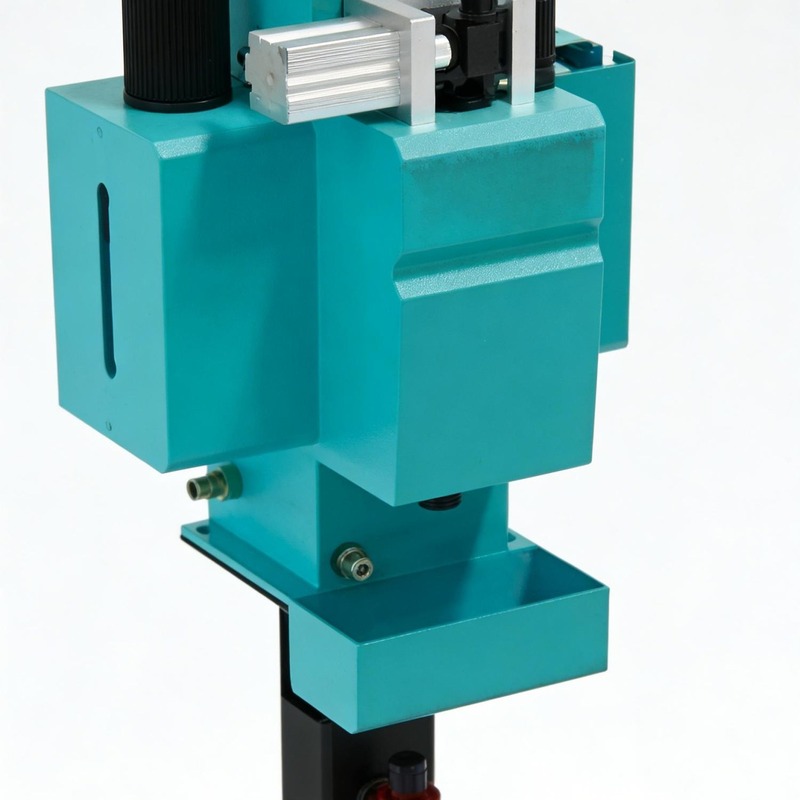
Product Overview
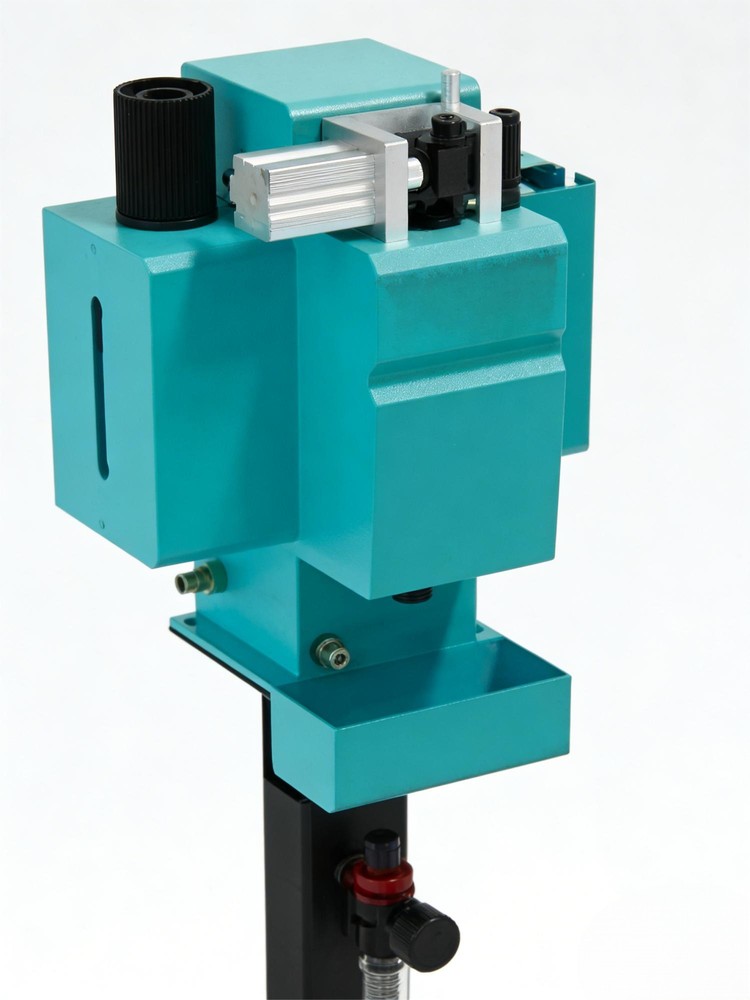
The Robot Welding Torch Cleaning Station automatically removes spatter and debris from welding torch nozzles to keep robotic welding systems operating at consistent quality. It requires a compressed air source of 0.6 MPa and approximately 10 L/s air flow, with a torch cleaning cycle of approximately 6–7 seconds.
Product Description
Spatter build-up on a welding torch nozzle is a quiet productivity killer. As spatter accumulates, shielding gas flow becomes erratic, arc stability degrades and weld quality drifts — and in robotic welding, where the torch operates unattended between human adjustments, that drift can affect hundreds of welds before anyone notices. The Robot Welding Torch Cleaning Station addresses this automatically at the source.
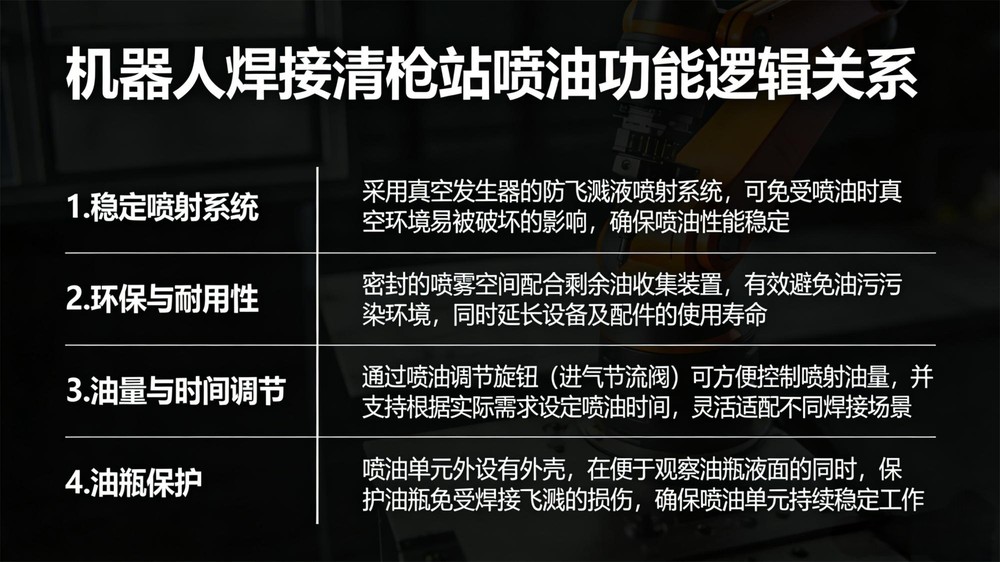
Mounted as a regular station in the robot work envelope, the cleaning station removes spatter and debris from the torch nozzle and contact tip on a programmed schedule. The robot simply visits the station between welds or at defined intervals, and the cleaning cycle restores the torch to a consistent condition — without stopping production or requiring manual torch maintenance. Consistent cleaning means consistent gas flow and arc behavior, and therefore consistent weld quality across the entire shift.
The station is engineered for clean integration into production. It operates from a standard compressed air supply of 0.6 MPa with an approximate air flow of 10 L/s, and completes each torch cleaning cycle in approximately 6–7 seconds — a short interruption that protects weld quality for the remainder of the production run. By removing the most common source of robotic weld variability, the station directly improves first-pass yield and reduces rework.
Key Features
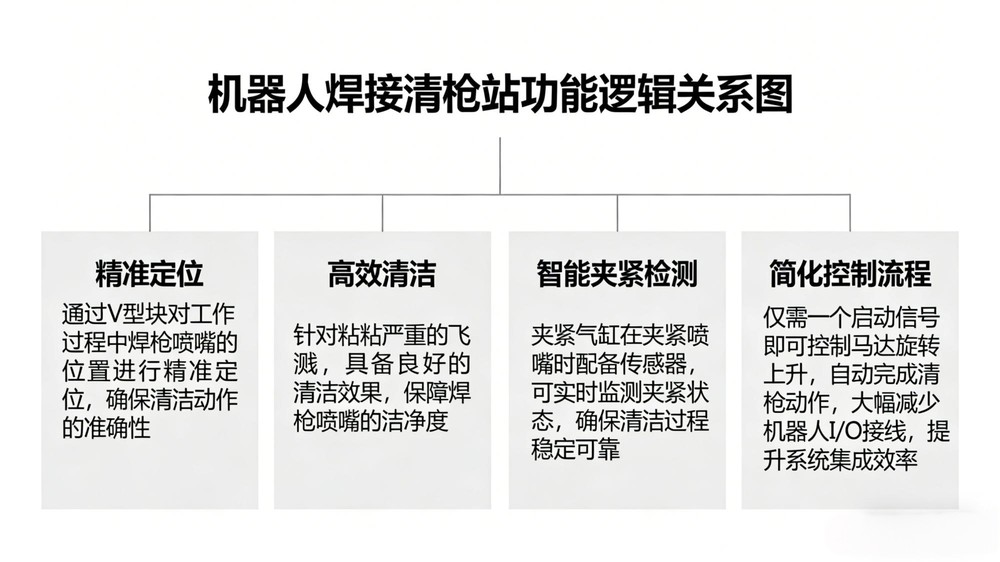
- Automatic removal of spatter and debris from welding torch nozzles
- Restores consistent shielding gas flow and arc stability
- Programmed cleaning as part of the robot routine
- Fast 6–7 second cleaning cycle
- Standard compressed air supply: 0.6 MPa, ~10 L/s
Technical Specifications
| Parameter | Value |
|---|
| Compressed Air Source | 0.6 MPa |
| Required Air Flow | Approx. 10 L/s |
| Cleaning Cycle | Approx. 6–7 s |
| Function | Spatter and debris removal from torch nozzle |
| Integration | Robot work-envelope station |
Applications
Robotic MIG/MAG welding cells requiring consistent weld quality, automatic torch maintenance in high-volume welding production, and welding lines where manual torch cleaning is a bottleneck or quality risk.
![]()
![]()
![]()